
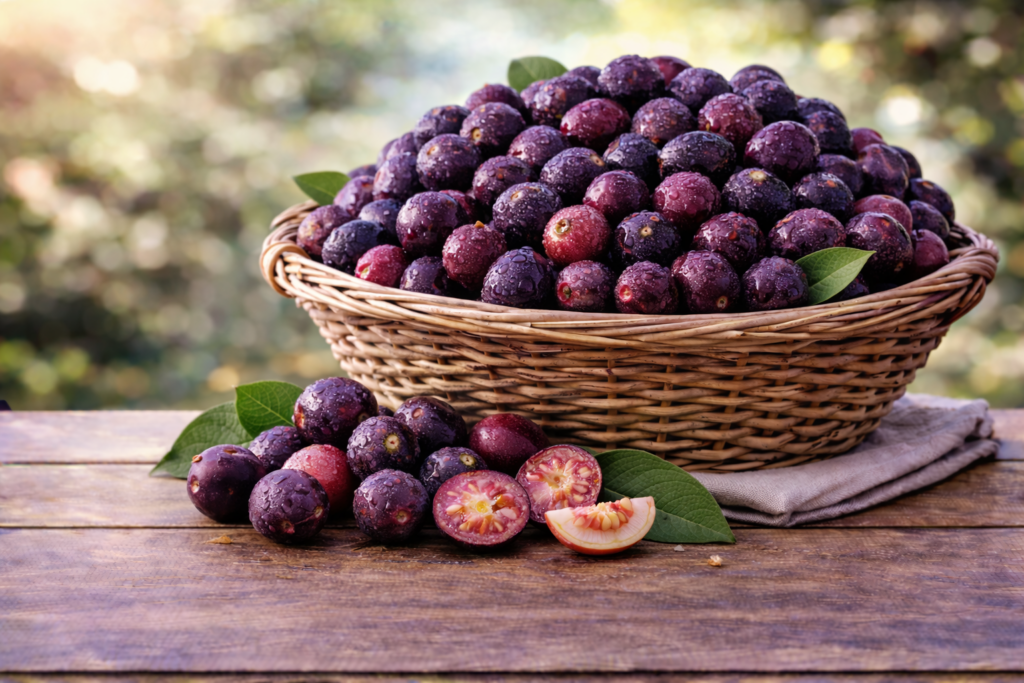
Phalsa is tiny, dark, and intensely refreshing in summer. The fruit is delicate, so the healthiest phalsa is usually the simplest: fresh or lightly blended.
In a nutshell: The values provided are approximate and can vary depending on the size and ripeness.
1) Phalsa
Nutritional facts per 100g
| Nutrient | Amount Per 100g | % Daily Value* |
|---|---|---|
| Calories | 43 kcal | 2% |
| Carbohydrates | 10.1 g | 4% |
| Fiber | 2.1 g | 8% |
| Sugars | 7 g | – |
| Protein | 1 g | 2% |
| Fat | 0.5 g | 1% |
| Vitamin A | 90 IU | 2% |
| Vitamin C | 25 mg | 42% |
| Potassium | 200 mg | 4% |
| Calcium | 20 mg | 2% |
Pros
- Refreshing summer fruit option.
- Works well as a light sherbet without much sugar.
- Fiber supports digestion.
Cons
- Spoils quickly, so quality varies.
- Market sherbets often add a lot of sugar.
- Too sour for very sensitive stomachs.
Right time to eat
- Afternoon in summer.
- Between meals as a cooling drink.
Health benefits
- Helps hydration routines in hot weather.
- Vitamin C supports immunity routines.
- Fiber supports digestion.
Best way to eat
- Eat fresh berries after rinsing.
- Blend with water, strain lightly, keep sweetener minimal.
- Add mint or roasted cumin instead of extra sugar.
*Percent Daily Values are based on a 2,000 calorie diet.


Join the conversation