
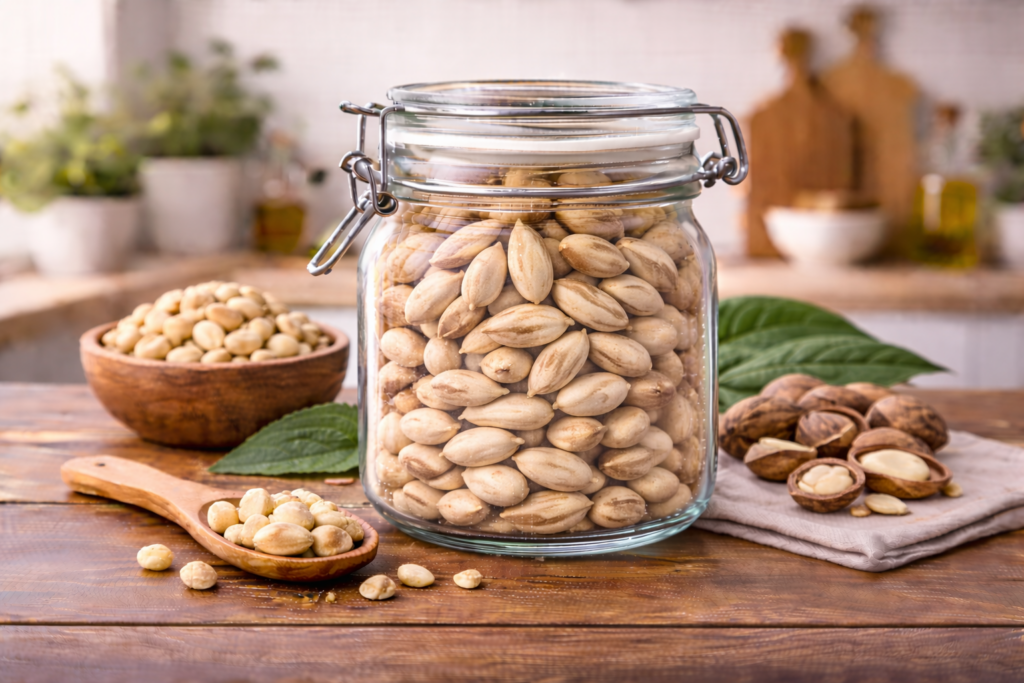
Pili nuts are buttery and rich, the kind that tastes like a premium snack even without seasoning. Because they are very fatty, portion size matters.
In a nutshell: The values provided are approximate and can vary depending on the size and ripeness.
1) Pili nut
Nutritional facts per 100g
| Nutrient | Amount Per 100g | % Daily Value* |
|---|---|---|
| Calories | 719 kcal | 36% |
| Carbohydrates | 7.8 g | 3% |
| Fiber | 4.4 g | 18% |
| Sugars | 1.4 g | – |
| Protein | 10.8 g | 22% |
| Fat | 79.6 g | 102% |
| Vitamin A | 0 IU | 0% |
| Vitamin C | 0 mg | 0% |
| Potassium | 458 mg | 10% |
| Calcium | 44 mg | 4% |
Pros
- Very satisfying, great for cravings control in small portions.
- Low carbs, fits many low-carb eating styles.
- Good “premium snack” alternative to fried items.
Cons
- Extremely calorie-dense, overeating is easy.
- Some packaged pili snacks add salt or oils.
- Tree nut allergy risk for sensitive people.
Right time to eat
- Mid-morning or evening snack, small handful.
- Best when you need satiety, not when you want “light” food.
Health benefits
- Helps keep you full, supports portion control when measured.
- Useful for replacing ultra-processed snacks.
- Works well with fruit for a balanced snack.
Best way to eat
- Eat plain or lightly roasted.
- Keep portion measured because it is very fatty.
- Pair with water, fruit, or curd for better balance.
*Percent Daily Values are based on a 2,000 calorie diet.


Join the conversation