
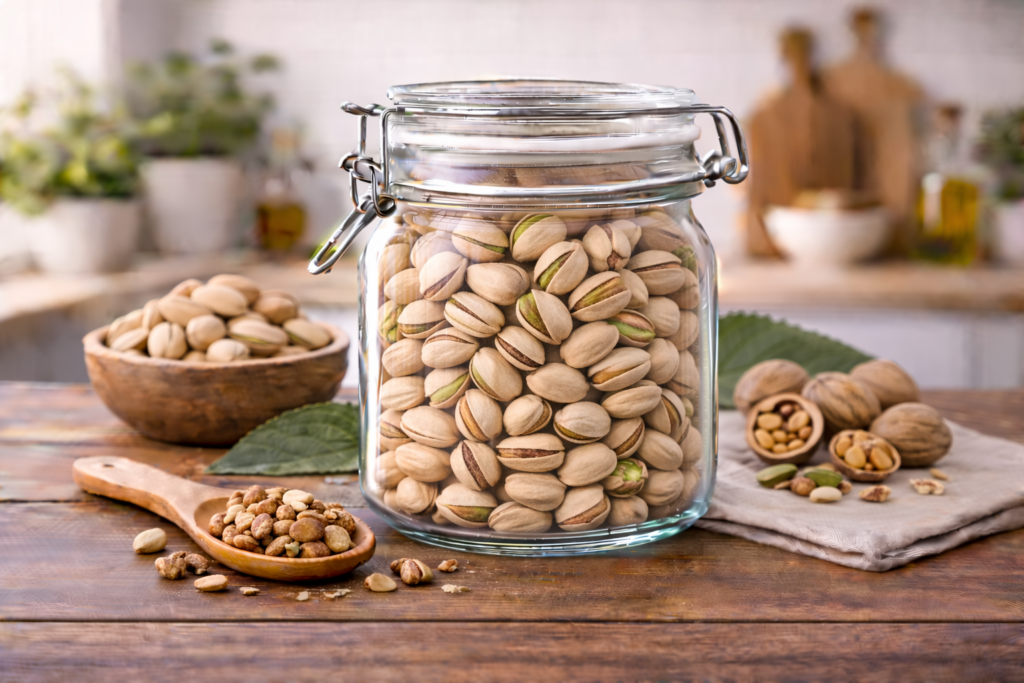
Pistachios are the “slow snack” nut. The shells naturally force you to pace yourself, which is secretly one of their best features.
In a nutshell: The values provided are approximate and can vary depending on the brand, processing, and freshness.
1) Pistachio
Nutritional facts per 100g
| Nutrient | Amount Per 100g | % Daily Value* |
|---|---|---|
| Calories | 562 kcal | 28% |
| Carbohydrates | 28.3 g | 10% |
| Fiber | 10.3 g | 37% |
| Sugars | 7.7 g | – |
| Protein | 20.2 g | 40% |
| Fat | 45.3 g | 58% |
| Vitamin A | 516 IU | 10% |
| Vitamin C | 5.6 mg | 6% |
| Potassium | 1025 mg | 22% |
| Calcium | 105 mg | 8% |
Pros
- High in protein + fiber, so it supports better snacking.
- Shelling slows eating and helps portion control.
- Good topping for oats, salads, and desserts.
Cons
- Salted pistachios can add a lot of sodium.
- Calorie-dense, so large handfuls can overshoot goals.
- Not suitable for people with nut allergy.
Right time to eat
- Evening snack or mid-morning snack.
- As a small side with tea-time (instead of fried snacks).
- Post-workout snack in a controlled portion.
Health benefits
- Supports fuller snacking due to fiber and protein.
- Potassium supports normal daily hydration balance.
- Works well in balanced diets as a measured fat source.
Best way to eat
- Prefer unsalted or lightly salted pistachios.
- Eat from the shell to slow down.
- Use crushed pistachios as garnish instead of eating unlimited handfuls.
*Percent Daily Values are based on a 2,000 calorie diet.


Join the conversation