
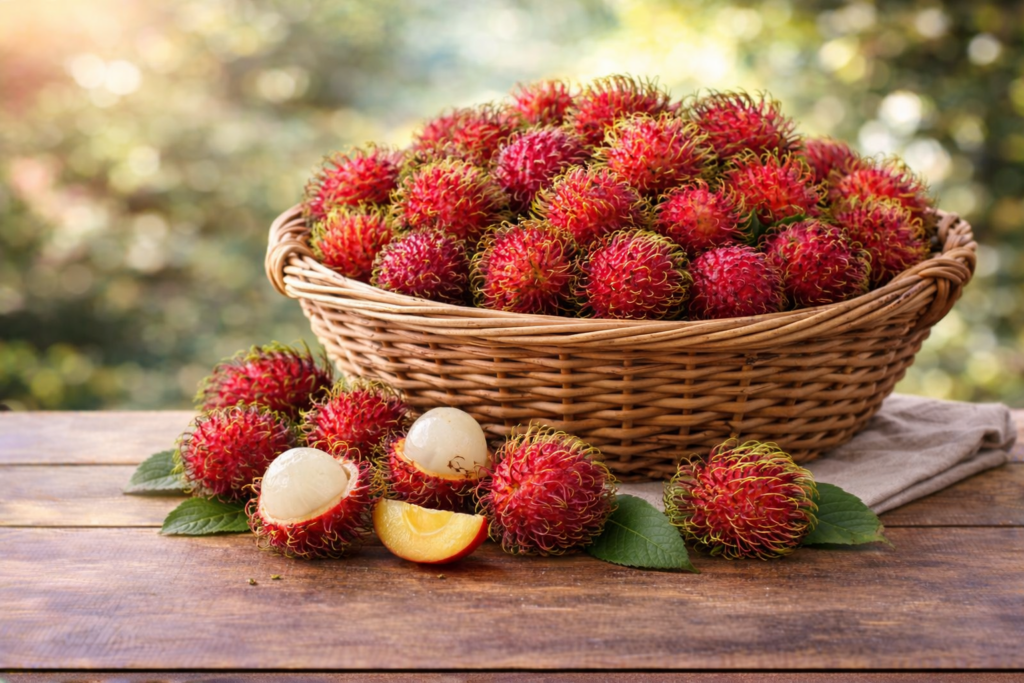
Rambutan is a juicy, sweet fruit similar to lychee in the way people eat it: one after another. That’s why the best rule is simple: portion first, then stop.
The values provided are approximate can vary depending on the sweetness and ripeness.
1) Rambutan Fresh
Nutritional facts per 100g
| Nutrient | Amount Per 100g | % Daily Value* |
|---|---|---|
| Calories | 68 kcal | 3% |
| Carbohydrates | 16.5 g | 6% |
| Fiber | 0.9 g | 3% |
| Sugars | 13.0 g | – |
| Protein | 0.9 g | 2% |
| Fat | 0.2 g | 0% |
| Vitamin A | 0 IU | 0% |
| Vitamin C | 20.0 mg | 33% |
| Potassium | 42 mg | 1% |
| Calcium | 22 mg | 2% |
Pros
- Sweet fruit option that feels refreshing
- Good dessert replacement in a small portion
Cons
- Low fiber, so it’s easy to overeat
Right time to eat
- Afternoon snack
- After meals as a small sweet finish
Health benefits
- Supports cleaner snacking vs sweets when controlled
Best way to eat
- Portion into a bowl first
- Do not keep eating one-by-one for long
In a nutshell
Rambutan is a sweet, bite-size fruit. Best enjoyed in a measured bowl to avoid overeating.
*Percent Daily Values are based on a 2,000 calorie diet.


Join the conversation