
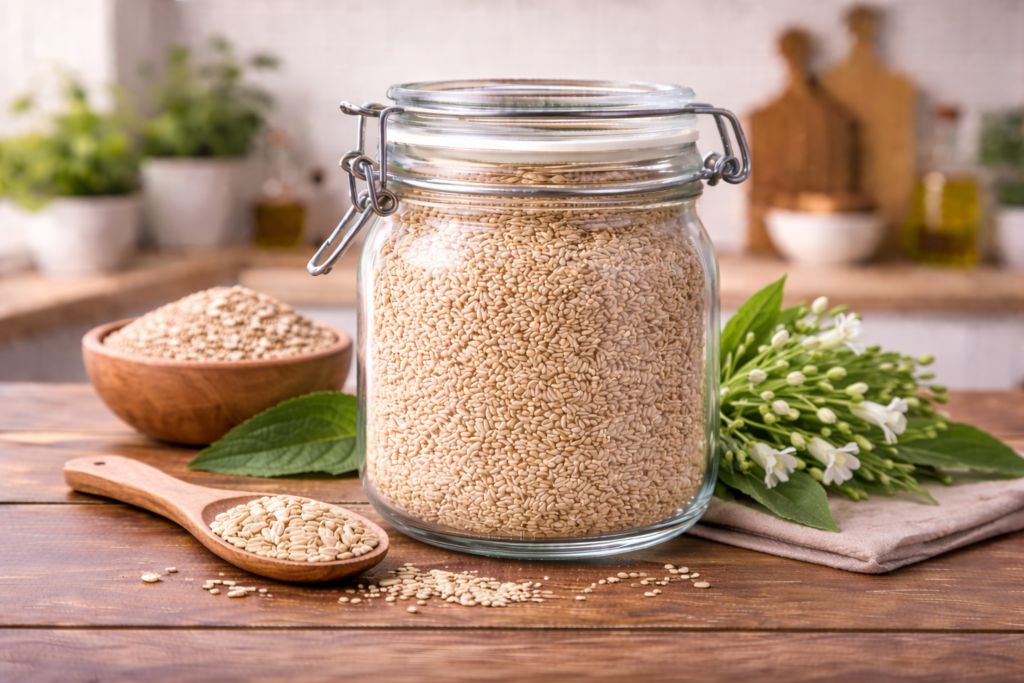
Sesame (til) is the small seed that makes food taste expensive. A little sprinkle changes the whole vibe, so it’s perfect for portion control.
In a nutshell: The values provided are approximate and can vary depending on variety and roasting.
1) Sesame (til)
Nutritional facts per 100g
| Nutrient | Amount Per 100g | % Daily Value* |
|---|---|---|
| Calories | 573 kcal | 29% |
| Carbohydrates | 23.4 g | 9% |
| Fiber | 11.8 g | 42% |
| Sugars | 0.3 g | – |
| Protein | 17.7 g | 35% |
| Fat | 49.7 g | 64% |
| Vitamin A | 0 IU | 0% |
| Vitamin C | 0 mg | 0% |
| Potassium | 468 mg | 10% |
| Calcium | 975 mg | 75% |
Pros
- Big flavour in small amount, easy to keep portions sensible.
- Great in chutneys, toppings, tahini-style pastes.
- Can make meals more satisfying without sugar.
Cons
- Calorie-dense if you start eating it in large quantities.
- Some people feel heaviness/acidity with excess sesame.
- Allergy risk for some people.
Right time to eat
- With meals as topping or chutney.
- Daytime is better if rich foods feel heavy at night.
Health benefits
- Supports meal satisfaction, helps reduce junk cravings.
- Fiber supports digestion routines when portioned.
- Useful for making simple food taste better and feel more complete.
Best way to eat
- Lightly roast for flavour.
- Use as garnish or chutney ingredient, not large servings.
- Keep sweet sesame snacks occasional.
*Percent Daily Values are based on a 2,000 calorie diet.


Join the conversation