
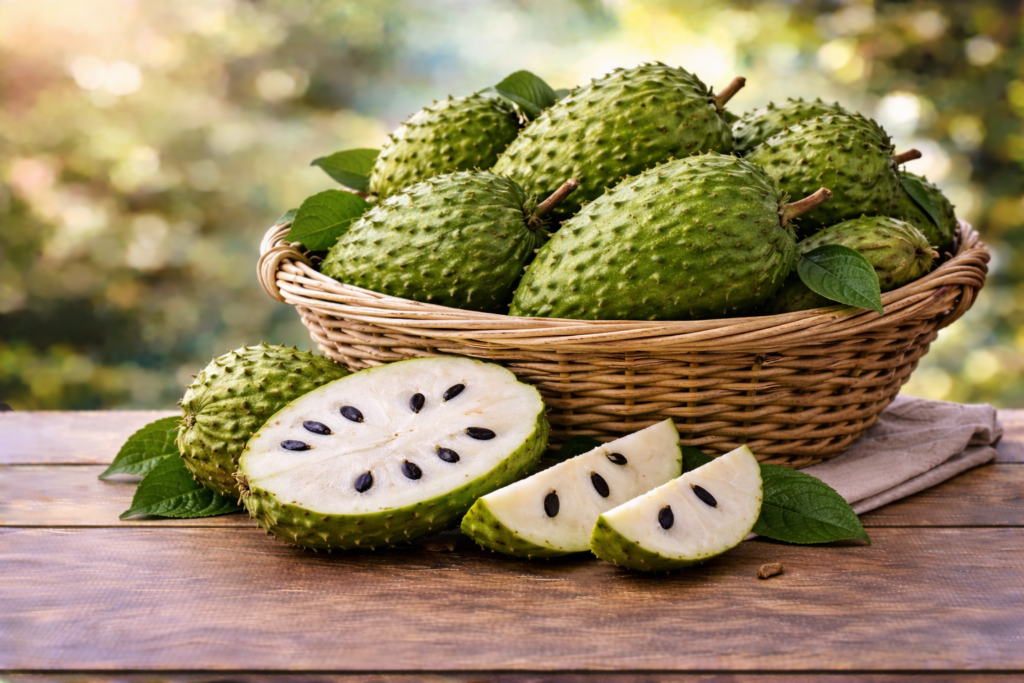
Soursop has a creamy tropical texture with a sweet-tangy flavor that feels like fruit and dessert at the same time. It is best enjoyed fresh and simple.
In a nutshell: The values provided are approximate and can vary depending on the size and ripeness.
1) Soursop
Nutritional facts per 100g
| Nutrient | Amount Per 100g | % Daily Value* |
|---|---|---|
| Calories | 66 kcal | 3% |
| Carbohydrates | 16.8 g | 6% |
| Fiber | 3.3 g | 13% |
| Sugars | 13.5 g | – |
| Protein | 1 g | 2% |
| Fat | 0.3 g | 0% |
| Vitamin A | 0 IU | 0% |
| Vitamin C | 20.6 mg | 34% |
| Potassium | 278 mg | 6% |
| Calcium | 14 mg | 1% |
Pros
- Sweet-tangy fruit that can replace desserts.
- Fiber helps keep the snack satisfying.
- Vitamin C supports immunity routines.
Cons
- Natural sugars add up if you take large servings.
- Packaged soursop drinks often add extra sugar.
- Seeds are not edible, remove fully.
Right time to eat
- Mid-morning or early evening snack.
- Post-lunch dessert swap in small portion.
Health benefits
- Helps satisfy sweet cravings with a whole fruit.
- Fiber supports digestion.
- Hydration-friendly tropical fruit option.
Best way to eat
- Eat fresh pulp and remove seeds completely.
- Blend with water or curd without adding sugar.
- Keep portion moderate due to sweetness.
*Percent Daily Values are based on a 2,000 calorie diet.


Join the conversation