
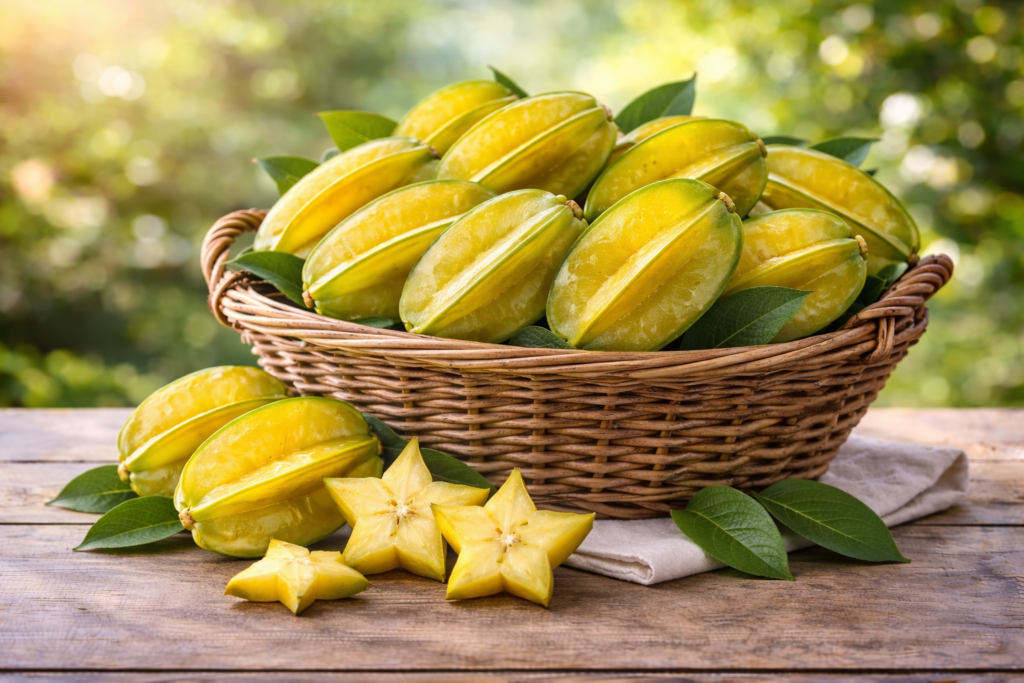
Star fruit (carambola) is light, juicy, and tangy. It is one of those fruits that feels “snackable” without feeling heavy. The taste changes a lot with ripeness: unripe is more sour, ripe is sweeter.
Below are the nutritional facts of star fruit per 100g, along with pros and cons, right time to eat, health benefits, and best way to eat.
The values provided are approximate can vary depending on the size and ripeness.
1) Star Fruit (Fresh)
Nutritional facts per 100g
| Nutrient | Amount Per 100g | % Daily Value* |
|---|---|---|
| Calories | 31 kcal | 2% |
| Carbohydrates | 6.7 g | 2% |
| Fiber | 2.8 g | 10% |
| Sugars | 3.9 g | – |
| Protein | 1.0 g | 2% |
| Fat | 0.3 g | 0% |
| Vitamin A | 61 IU | 1% |
| Vitamin C | 34.4 mg | 38% |
| Potassium | 133 mg | 3% |
| Calcium | 3 mg | 0% |
Pros
- Very low calorie, light snack fruit
- Good vitamin C for a refreshing fruit
- Fiber helps make it more satisfying than juice
Cons
- Very sour when unripe, can irritate sensitive stomach/teeth
- Some people do not enjoy the taste plain
- If you have kidney issues, avoid frequent intake
Right time to eat
- Mid morning or afternoon as a light snack
- Hot weather refresh snack
- With meals if acidity bothers you
Health benefits
- Supports hydration routine and light snacking habits
- Supports vitamin C intake
- Supports digestion routine with fiber
Best way to eat
- Choose ripe fruit (more sweet, less sharp)
- Eat plain slices, avoid adding sugar daily
- If it feels too sour, eat after meals
In a nutshell
Star fruit is light, low calorie, and vitamin C rich. Best when ripe. If acidity or kidney issues exist, keep intake minimal.
*Percent Daily Values are based on a 2,000 calorie diet.


Join the conversation