
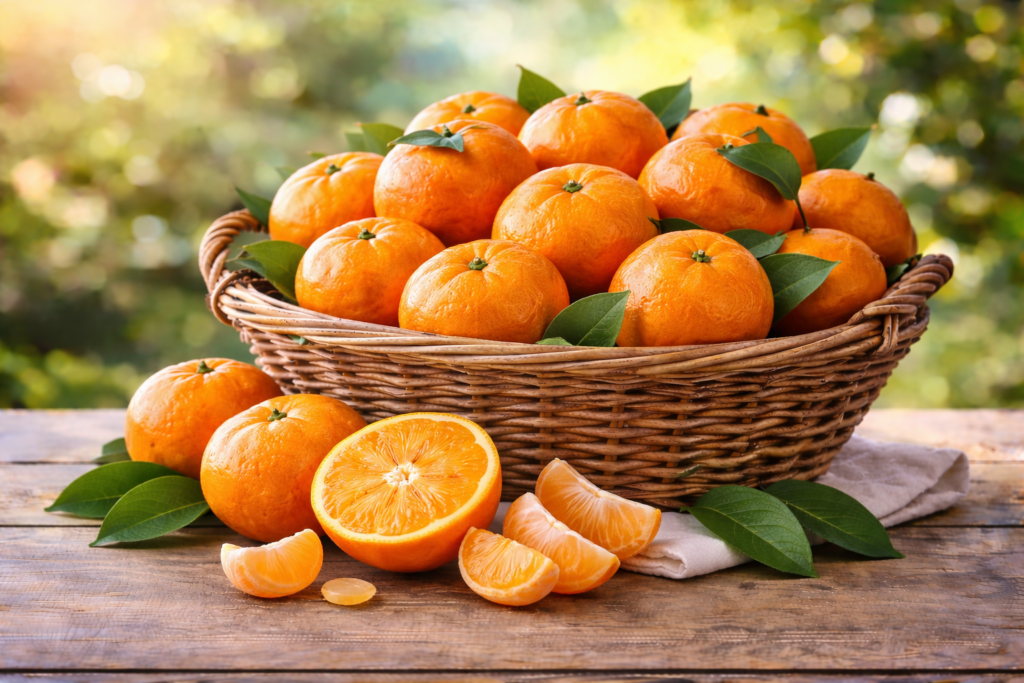
Tangerine is a peel-and-eat fruit that fits real life. It is easy, portable, and usually finishes cravings without making you feel heavy. The only rule is portion control if you keep eating one after another.
The values provided are approximate can vary depending on the size and ripeness.
1) Tangerine Fresh
Nutritional facts per 100g
| Nutrient | Amount Per 100g | % Daily Value* |
|---|---|---|
| Calories | 53 kcal | 3% |
| Carbohydrates | 13.3 g | 5% |
| Fiber | 1.8 g | 7% |
| Sugars | 10.6 g | – |
| Protein | 0.8 g | 2% |
| Fat | 0.3 g | 0% |
| Vitamin A | 681 IU | 14% |
| Vitamin C | 26.7 mg | 44% |
| Potassium | 166 mg | 4% |
| Calcium | 37 mg | 4% |
Pros
- Easy snack fruit, no prep needed
- Good vitamin C support
- Portable and works for busy routines
Cons
- Easy to eat many at once because it is small
- Citrus can irritate acidity-sensitive digestion for some people
Right time to eat
- Mid morning or afternoon snack
- After meals as a sweet finish
- If acidity is an issue, avoid empty stomach
Health benefits
- Supports daily vitamin C intake
- Supports cleaner snacking habits
- Supports hydration feel because it is juicy
Best way to eat
- Eat whole fruit, not only juice
- Pair with nuts if you need more fullness
2) Tangerine Juice
Nutritional facts per 100g
| Nutrient | Amount Per 100g | % Daily Value* |
|---|---|---|
| Calories | 43 kcal | 2% |
| Carbohydrates | 10.0 g | 4% |
| Fiber | 0.2 g | 1% |
| Sugars | 9.2 g | – |
| Protein | 0.5 g | 1% |
| Fat | 0.2 g | 0% |
| Vitamin A | 400 IU | 8% |
| Vitamin C | 20.0 mg | 33% |
| Potassium | 140 mg | 3% |
| Calcium | 15 mg | 2% |
Pros
- Fast and convenient
- Refreshing option in hot weather
Cons
- Very low fiber compared to whole fruit
- Easy to drink more than you realize
Right time to eat
- Occasionally as a refresh drink
- Better with meals if acidity is an issue
Health benefits
- Supports hydration routine when portion controlled
Best way to eat
- Prefer fresh juice without added sugar
- Keep portion small
In a nutshell
Whole tangerine is the better daily choice because it keeps fiber. Juice is fine sometimes, but it is easier to overconsume.
*Percent Daily Values are based on a 2,000 calorie diet.


Join the conversation