
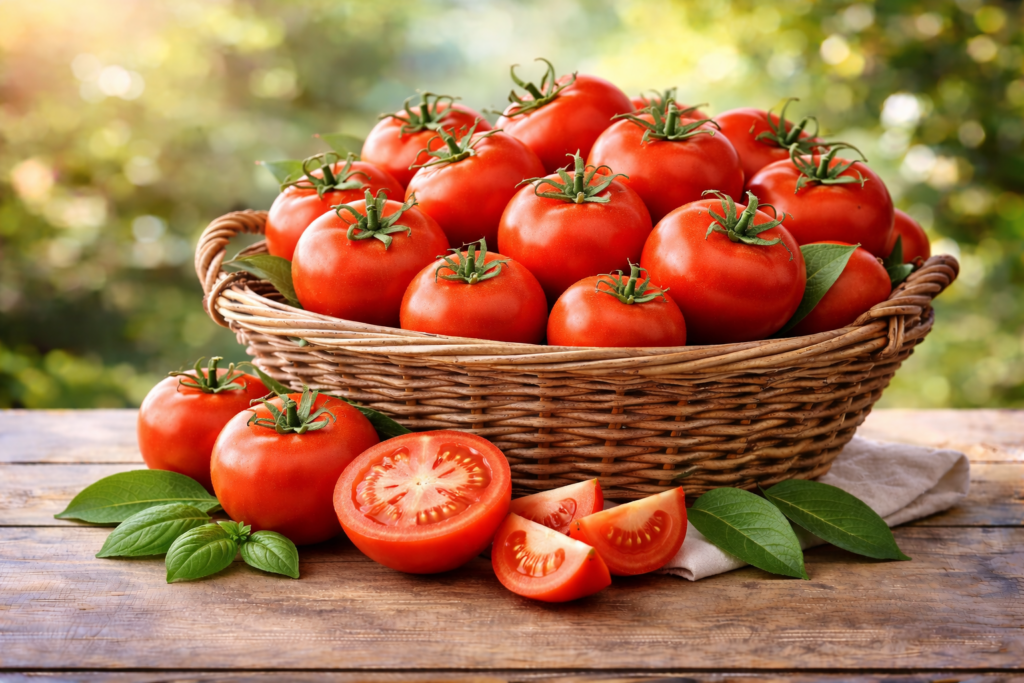
Tomato is one of those everyday foods that quietly upgrades meals. It adds volume, freshness, and taste without adding heavy calories. The biggest difference comes from how you eat it: raw, cooked, or concentrated forms like puree.
The values provided are approximate can vary depending on the size and ripeness.
1) Tomato Raw
Nutritional facts per 100g
| Nutrient | Amount Per 100g | % Daily Value* |
|---|---|---|
| Calories | 18 kcal | 1% |
| Carbohydrates | 3.9 g | 1% |
| Fiber | 1.2 g | 5% |
| Sugars | 2.6 g | – |
| Protein | 0.9 g | 2% |
| Fat | 0.2 g | 0% |
| Vitamin A | 833 IU | 17% |
| Vitamin C | 13.7 mg | 23% |
| Potassium | 237 mg | 5% |
| Calcium | 10 mg | 1% |
Pros
- Low calorie, adds volume to meals
- Easy to include daily in salads and sandwiches
- Helps make meals feel fresh and lighter
Cons
- Acidity can bother sensitive stomach for some people
- Can trigger discomfort if eaten in very large quantity at night
Right time to eat
- Lunch and dinner as salad or side
- Midday snack in a sandwich or chaat style bowl
- If acidity is an issue, prefer with meals instead of empty stomach
Health benefits
- Supports meal volume and better portion control
- Supports daily vitamin intake consistency
- Supports hydration feel because it is water-rich
Best way to eat
- Raw slices with a pinch of salt and black pepper
- In salad with cucumber and onion for a filling plate
- Pair with protein foods for a balanced meal
2) Cherry Tomato
Nutritional facts per 100g
| Nutrient | Amount Per 100g | % Daily Value* |
|---|---|---|
| Calories | 18 kcal | 1% |
| Carbohydrates | 3.9 g | 1% |
| Fiber | 1.2 g | 5% |
| Sugars | 2.6 g | – |
| Protein | 0.9 g | 2% |
| Fat | 0.2 g | 0% |
| Vitamin A | 1260 IU | 25% |
| Vitamin C | 15.0 mg | 25% |
| Potassium | 237 mg | 5% |
| Calcium | 10 mg | 1% |
Pros
- Easy snack-style tomato, convenient in lunch boxes
- Often tastes sweeter than big tomatoes
- Great for quick salads without much prep
Cons
- Easy to eat too many like candy tomatoes
- May still irritate acidity-sensitive digestion
Right time to eat
- Anytime with meals as salad or side
- Afternoon snack in a bowl with salt and pepper
Health benefits
- Supports cleaner snacking habits
- Supports meal volume without heaviness
Best way to eat
- Halved with a little salt and lemon
- Mixed into curd or salad bowls
3) Tomato Puree
Nutritional facts per 100g
| Nutrient | Amount Per 100g | % Daily Value* |
|---|---|---|
| Calories | 38 kcal | 2% |
| Carbohydrates | 8.6 g | 3% |
| Fiber | 1.7 g | 7% |
| Sugars | 5.0 g | – |
| Protein | 1.7 g | 3% |
| Fat | 0.2 g | 0% |
| Vitamin A | 1440 IU | 29% |
| Vitamin C | 12.0 mg | 20% |
| Potassium | 439 mg | 9% |
| Calcium | 20 mg | 2% |
Pros
- Concentrated flavor, makes cooking easy
- Useful for gravies, soups, and sauces
- Good choice when fresh tomatoes are not available
Cons
- Packaged puree can include salt or additives depending on brand
- Overuse in oily gravies can make meals heavy
Right time to eat
- With lunch and dinner meals as part of cooking
Health benefits
- Supports consistent tomato intake through cooking
- Supports meal taste satisfaction which can reduce junk cravings
Best way to eat
- Use in home gravies with controlled oil
- Choose cleaner ingredient labels where possible
In a nutshell
Raw tomatoes are light and easy daily. Puree is convenient for cooking, but meal quality depends on how much oil and salt you use.
*Percent Daily Values are based on a 2,000 calorie diet.


Join the conversation