
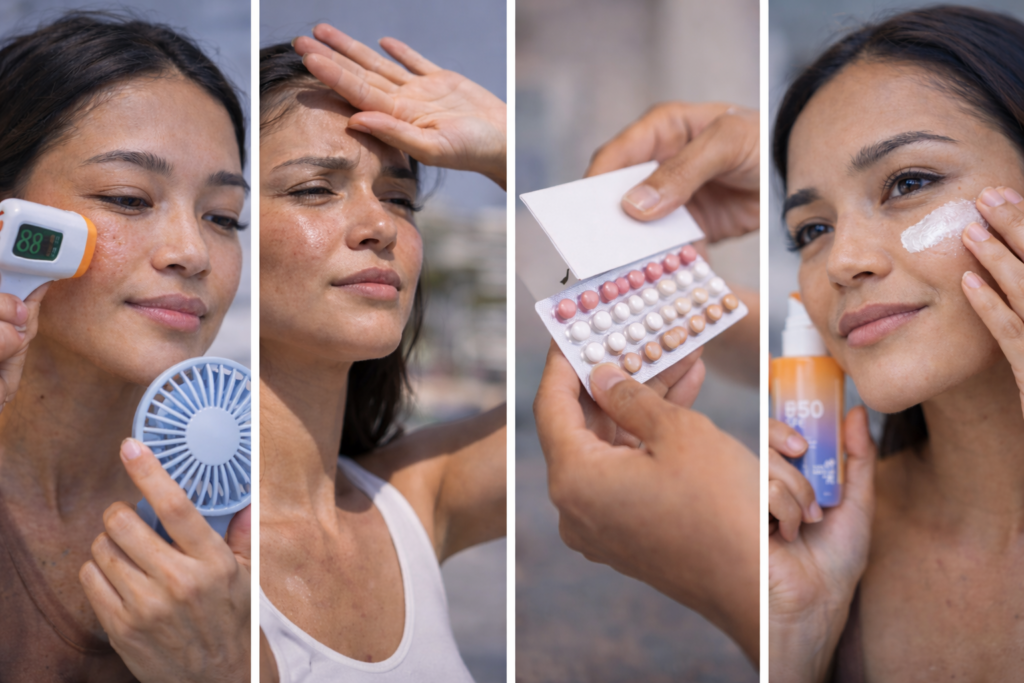
“Melasma isn’t stubborn. It’s multi-trigger.” – Wellness Kraft
Introduction
Melasma can be emotionally exhausting because it doesn’t behave like a simple tan.
You can be careful. You can be consistent. And still, one summer wedding, one beach trip, one week of heat and stress, and suddenly the patches look darker again.
That’s not you failing. That’s melasma doing what melasma does: reacting to triggers beyond UV alone.
A real-life moment
Alyssa finally finds a sunscreen she loves. She wears it daily. She feels proud. Then she goes on a trip with a lot of outdoor walking in high heat. She doesn’t burn. But by the end of the week, her melasma looks deeper.
She comes back frustrated: “I wore sunscreen. Why did this happen?”
Because heat and visible light can still play a role, and some sunscreens protect better against UV than visible light.
The major triggers that matter
UV radiation
Still important. Still a big driver. Daily broad-spectrum sunscreen is foundational.
Visible light
Visible light can worsen pigmentation in some people, especially in deeper skin tones. This is one reason dermatologists often recommend tinted sunscreens that contain iron oxides, because they can help protect against visible light better than many untinted formulas.
Heat
Heat can worsen melasma even without intense sun exposure. That includes hot climates, outdoor workouts, and sometimes even heat-based devices or environments that keep your face warm for long periods.
Hormones
Pregnancy, oral contraceptives, and hormonal shifts can trigger or worsen melasma. That’s why melasma is often associated with life stages and hormonal changes.
Inflammation and irritation
Harsh routines, over-exfoliation, and skin irritation can worsen pigment behavior. For melasma-prone skin, calming is a strategy.
Why sunscreen alone sometimes disappoints
Because melasma can be driven by multiple wavelengths and heat, “broad-spectrum SPF” is necessary but not always sufficient.
For many people, a better approach is:
Broad-spectrum sunscreen + visible light protection (often tinted/iron oxides) + heat management + gentle routine + targeted pigment treatments.
A practical anti-trigger lifestyle approach
This isn’t about living indoors. It’s about smarter protection.
Use sunscreen daily and apply enough.
Consider tinted sunscreen for visible light exposure, especially outdoors.
Use hats and shade when possible.
Reduce prolonged heat exposure when your melasma is flaring (hot yoga, midday outdoor workouts, long sun-heated walks).
Avoid irritating skincare stacks that inflame the skin.
Key Takeaways
- Melasma triggers include UV, visible light, heat, hormones, and irritation.
- Sunscreen is foundational, but visible light protection can matter too.
- Heat alone can worsen melasma even without burning.
- Hormonal shifts can strongly influence melasma behavior.
- A calm barrier-friendly routine helps reduce rebound darkening.
Research Insight
Dermatology references describe melasma as a common facial pigmentation disorder influenced by sun exposure and hormonal factors. DermNet®
https://dermnetnz.org/topics/melasma
Peer-reviewed reviews discuss photoprotection beyond UV and note that tinted sunscreens with iron oxides can be beneficial for visible light–induced hyperpigmentation disorders, including melasma. ScienceDirect+1
https://www.sciencedirect.com/science/article/abs/pii/S0190962220306940
https://onlinelibrary.wiley.com/doi/10.1111/phpp.70033
Clinical research has also compared tinted vs untinted sunscreens for visible light protection outcomes in melasma. PMC
https://pmc.ncbi.nlm.nih.gov/articles/PMC12475913/
FAQs
1) Can indoor light worsen melasma?
For some people, visible light exposure can contribute, especially if you’re near bright windows or spend time under strong lighting. If melasma is stubborn, tinted sunscreen can be worth discussing.
2) Is tinted sunscreen better than regular sunscreen for melasma?
Often yes for visible light protection, especially formulas with iron oxides, but you still need broad-spectrum UV protection too. The best sunscreen is the one you apply generously and consistently.
3) Why does melasma get worse in summer even with SPF?
Heat, sweating, reapplication gaps, and visible light exposure can all contribute. Also, many people apply less sunscreen than they think.
4) Can melasma go away completely?
It can fade significantly, but it often behaves like a chronic tendency. Think “manage and fade,” not “cure forever,” especially if triggers remain.
5) Does irritation from skincare make melasma darker?
It can. Inflammation can worsen pigmentation. For melasma-prone skin, gentle routines often outperform aggressive “burn it off” routines.
Concluding Thoughts
If sunscreen hasn’t solved your melasma alone, it doesn’t mean sunscreen is useless. It means melasma is multi-trigger. Protect against UV, consider visible light protection, respect heat, and keep your routine calm. Melasma responds best to steady strategy, not angry overcorrection.




Join the conversation