
Introduction
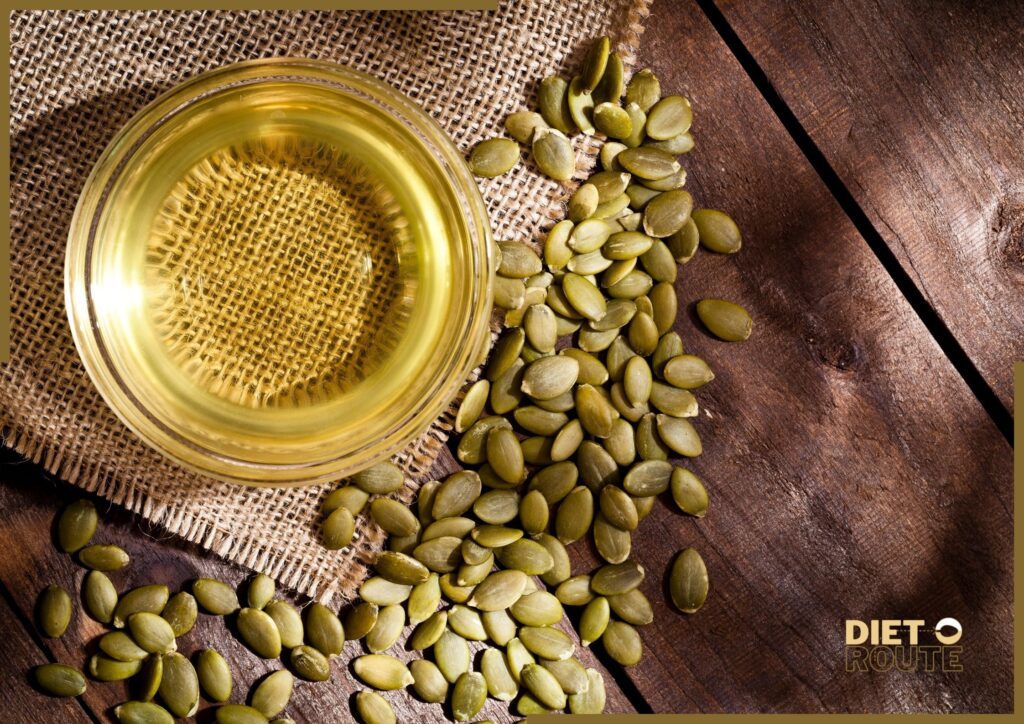
Due to its potential health advantages and unique flavor, edible pumpkin seed oil, derived from pumpkin seeds, is becoming more and more popular. A table showcasing its approximate composition per 100 grams will be included in this article’s complete overview of the nutritional value. We will also talk about the pros and cons of eating pumpkin seed oil, answer some frequently asked questions, and help you make an informed choice about adding it to your diet.
Nutritional Value Approximately 100g
| Nutrient | Amount Per Serving (1 tablespoon) | % Daily Value |
|---|---|---|
| Calories | 120 | 6% |
| Total Fat | 14g | 18% |
| – Saturated Fat | 2.7g | 14% |
| – Trans Fat | 0g | |
| Monounsaturated Fat | 4.6g | |
| Polyunsaturated Fat | 6.4g | |
| Cholesterol | 0mg | 0% |
| Sodium | 0mg | 0% |
| Total Carbohydrates | 0g | 0% |
| – Dietary Fiber | 0g | 0% |
| – Sugars | 0g | |
| Protein | 0g | 0% |
| Vitamin E | 5.8mg | 39% |
Pros
1. It is a good source of omega-3 and omega-6 fatty acids, which are important for heart health and general well-being.
2. It has a lot of antioxidants. The antioxidants in this oil help protect the body from free radicals and oxidative stress.
3. It may help men keep their prostates healthy.
4. It is full of important minerals like magnesium, zinc, and iron, all of which play important roles in many body processes.
5. It has a unique flavor that adds depth to salad dressings, dips, and marinades, making it a versatile and tasty addition to your cooking arsenal.
Cons
1. Like all oils, it has a lot of calories. It should be used in moderation so that you don’t eat too many calories.
2. People who have allergies to pumpkin seeds or other types of seeds should be careful when they use pumpkin seed oil. If you know you have allergies or sensitivities, talk to a healthcare professional.
Frequently Asked Questions (FAQ)
1. Is it safe to consume pumpkin seed oil?
2. Can oil from pumpkin seeds be used in cooking?
3. Does pumpkin seed oil help your skin in any way?
4. Is pumpkin seed oil suitable for vegetarians and vegans?
5. Can oil from pumpkin seeds help hair grow?
6. How Should Pumpkin Seed Oil Be Stored?
7. Is there anything bad that can happen if you eat pumpkin seed oil?
8. Can pumpkin seed oil be used during pregnancy or breastfeeding?
9. Is there a nutty flavor to pumpkin seed oil?
10. Can pumpkin seed oil be substituted for other oils?
In A Nut Shell
Due to its potential nutritional makeup, edible pumpkin seed oil has a number of health advantages. It is rich in important minerals, antioxidants, and vital fatty acids. The high calorie content, however, suggests that it be consumed in moderation. Explore the potential advantages of pumpkin seed oil while enjoying its unique flavor. Consult a health care professional if you have any specific health issues or allergies before making any changes to your diet.


Join the conversation